Edith Mary Hardman (Edith™)
A persistent fictional person
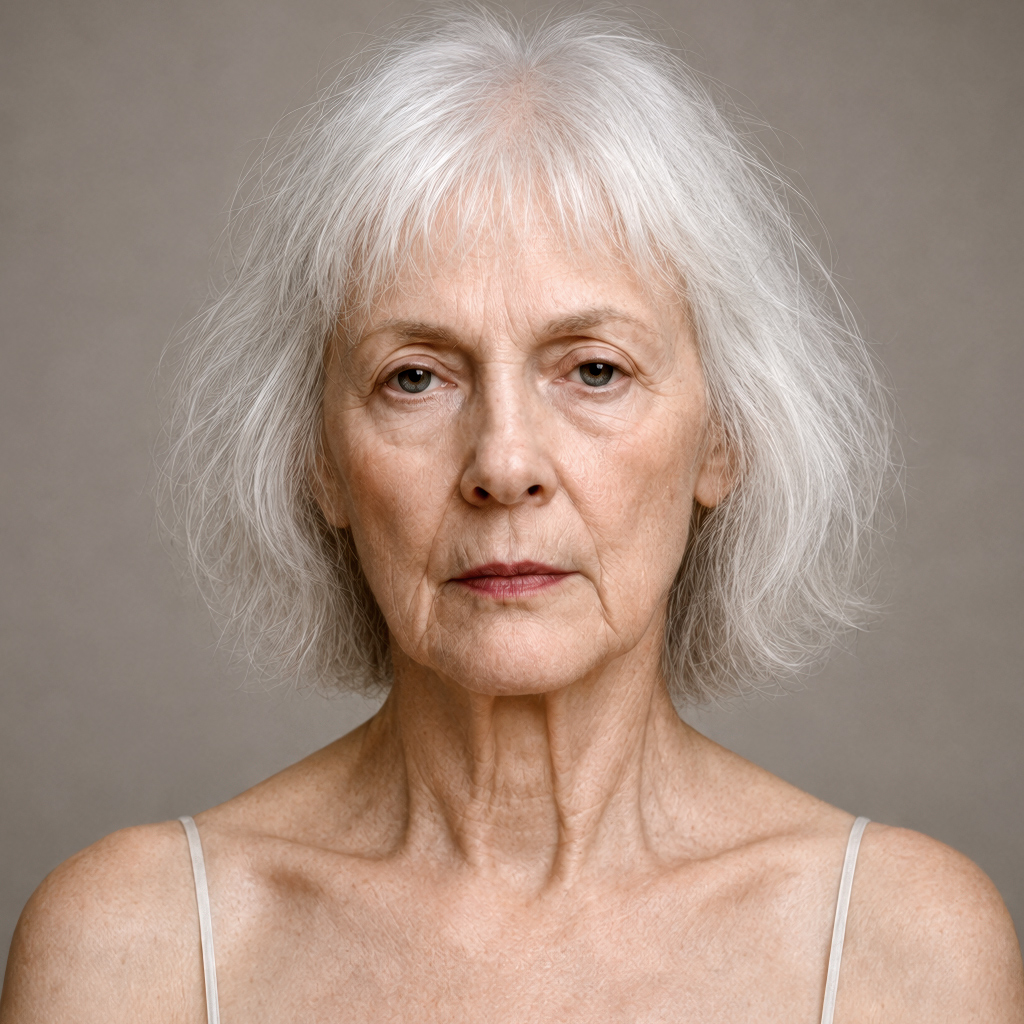
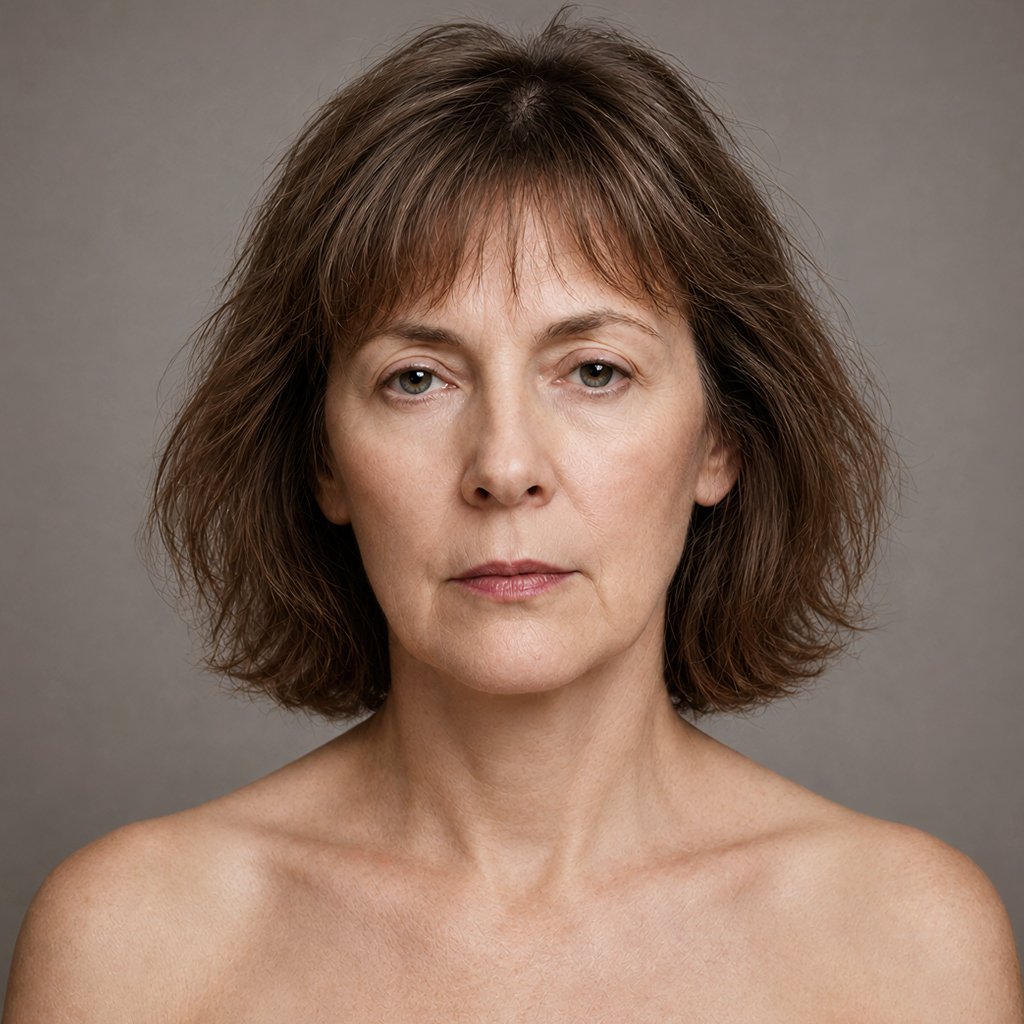
Above: Edith at 75 and 45 years old.
Edith Mary Hardman, usually referred to as Edith™, is a recurring fictional character created, developed and curated by Patrick Taylor as part of a future Women of Age project.
Edith was born in England during the 1950s. At the time of her fictional creation she is between seventy and seventy-five years old, and her canonical age remains within that range. She is therefore a 'baby boomer' (Boomer).
Her parents lived in Swindon and were lower middle class, intelligent and caring in the way they brought up their daughter, an only child. Edith was educated in what was known then as a Secondary Modern School and left with a few CSEs and not much more.
Edith had a 'sheltered upbringing' due to her parents' rather traditional values so she missed out on Rock and Roll and later, Flower Power and Free Love. Quiet and with few regular friends her own age, she tended to focus on hobbies and helping her parents with things. A 'good girl' one might say.
After leaving school, she got a job as an assistant at a local sub-post office. She was trustworthy, methodical, conscientious, discreet, and good with numbers, enjoying the daily discipline of balancing the accounts. And she was good with customers – always courteous and respectful.
It was those qualities that attracted one of the regular customers: a well-dressed man about ten years older than Edith. They started going out together and within two years, they were married. She was then 24 years old.
At first, the marriage was routine. She and her husband both went out to work and in the evenings Edith pursued her hobbies while her husband went to the local pub. But then her husband came home one evening with a child aged five. It turned out he'd been married before and the child was his young daughter. He'd managed to regain full custody of the child and he now expected Edith to look after her and bring up the girl as her own.
All this came as a shock to Edith. Apart from not having been told her husband had been married before, he now expected her to look after their home and act as the child's real mother. Inevitably it affected her employment at the local Post Office. She began working only part-time and then, because of his expectations, she left the job altogether and became financially dependent on her husband, like many women her age.
The 'marriage' (for want of a better word) lasted about 20 years. Her husband began spending less time at home with his wife and daughter, and it wasn't only the pub. He would often go away on Fridays, returning only on Monday evenings, telling Edith he'd been away 'on business'. She didn't believe him of course, but she remained faithful to her marriage and brought up the child pretty much by herself until the girl, now a young woman, left home to live her own life. Edith didn't receive much thanks for it but at least she could now devote herself to things she wanted to do. One of those things was drawing. She'd always been a gifted artist and she now had the chance to pursue something creative at last.
Marriage-wise, things came to a head when her husband started bringing a girlfriend home, expecting Edith to provide them both with an evening meal. Finally one evening, she decided her husband and his girlfriend's evening meal would be a panful of baked beans, piping hot. She didn't say anything. She went in the kitchen and poured the contents of six tins of baked beans into the biggest pan she had, brought the beans almost to the boil, then walked into the dining room and tipped the lot into her husband's lap, ruining his suit, not to mention his love life for several weeks.
"Have a nice dinner, Frank," she said, and walked out to stay with an old friend. Frank subsequently emptied the house, taking whatever he considered didn't belong to Edith and disappeared with the girlfriend. Divorce followed soon afterwards. If Edith's life had a Eureka moment, this was it.
Coercive control is a devilish thing. It creeps up on one in a relationship that is supposed to be balanced. Edith started to cry a lot, often about nothing much except the awful realisation that at forty-five years old, she hadn't yet really begun to live her own life: the life she wanted for herself. Now, she didn't need permission to buy herself nice perfume, or even a new frock. The problem was, she didn't have any money at all, and she couldn't live off her friend for the rest of her life.
But what? She'd no qualifications, no recent work experience, no useful contacts, not much of anything in fact. One thing she could do was clean. She'd been cleaning a home for more than 20 years and knew what "clean" meant. It meant actually clean. So Edith became a cleaner. She cleaned for people and she liked it.
Edith was now in Oxford where her friend Annie had lived her entire life. Oxford is far enough away from Swindon to begin to forget. Annie was lucky. She owned her own house, a small two-up two-down on the outskirts but not too far to walk into town (or catch a bus when it rained). She'd inherited it after her parents died. There was just enough room in Annie's little house for Edith, thank goodness. And all at once, it became the cleanest house in the whole of Oxford.
Then a stroke of luck. The young woman, Julie, who Edith had brought up, was disgusted with her father Frank after she'd heard what happened. She got in touch with Edith, effectively her stepmother, and asked what she could do to help. Edith said the one thing she needed was somewhere to live but she couldn't afford to pay much rent. Soon, Julie found a nice little house in Duke Street and offered to make up the rent until Edith could manage it herself. So at last, and for the first time in her life, Edith began to feel that she belonged to herself. Not merely as a person but as a woman, and that mattered.
The cleaning was going rather well. She enjoyed it partly because cleaning gives someone a peculiar intimacy with other people's lives. She noticed what had moved since last week, what had been left lying around and what had disappeared. She saw the small signs of happiness, worry, visitors, arguments, reconciliations and ordinary domestic life. Edith rarely commented however, discretion being part of her nature. Discretion is something her parents had taught her a long time ago.
In some ways, it was the perfect occupation. Edith could choose when she worked, it took her out, and inevitably she began to make friends – all kinds of friends. Cleaning people's houses would never make her rich but it left her enough time of her own to start producing detailed botanical drawings of plants from around the world. As the years went by, she became known for it, giving her a great deal of pleasure. She'd realised she was no longer just a piece of furniture. Edith Hardman was actually happy.
Unfortunately it was different for Annie. After her own failed marriage and physical abuse, she'd become anxious and rarely went out. Edith, of course, tried to take her under her wing but it wasn't easy. Annie didn't really want to learn how to draw, and when Edith half-jokingly suggested they paint the town red, Annie took the suggestion rather more literally than intended.
Happy though she was, Edith still felt something was missing from her life: excitement. She'd think back to the things she missed, the men she might have known, the experiences she might have had while Frank was away having affairs and she was tied to the proverbial kitchen sink. At seventy-five, surely it was too late for all that. Why invite trouble she doesn't need? Why risk becoming vulnerable again to somebody who might exploit her generosity? But was it really too late for the excitement she never had?
Edith is discreet. She doesn't tell everybody everything. There are certain things she keeps to herself …
Edith Mary Hardman (or plain Edith) is an original fictional character whose canonical identity, biography, written characterisation and visual representations have been developed as part of Patrick Taylor's artistic practice. Copyright and other intellectual-property rights subsist, where applicable, in the original literary and artistic works in which the character is expressed.
Any similarity between this fictional Edith Mary Hardman and a living Edith Mary Hardman is unintended and purely coincidental.
© Patrick Taylor 2026. All rights reserved in the original character material and other protectable elements.
